Vegan Whipped Cream: Three Ways to Make It
Chilled coconut cream gives the richest vegan whipped cream, aquafaba the lightest, and a carton of plant-based whipping cream the most familiar. Quantities, timings and fixes for each.
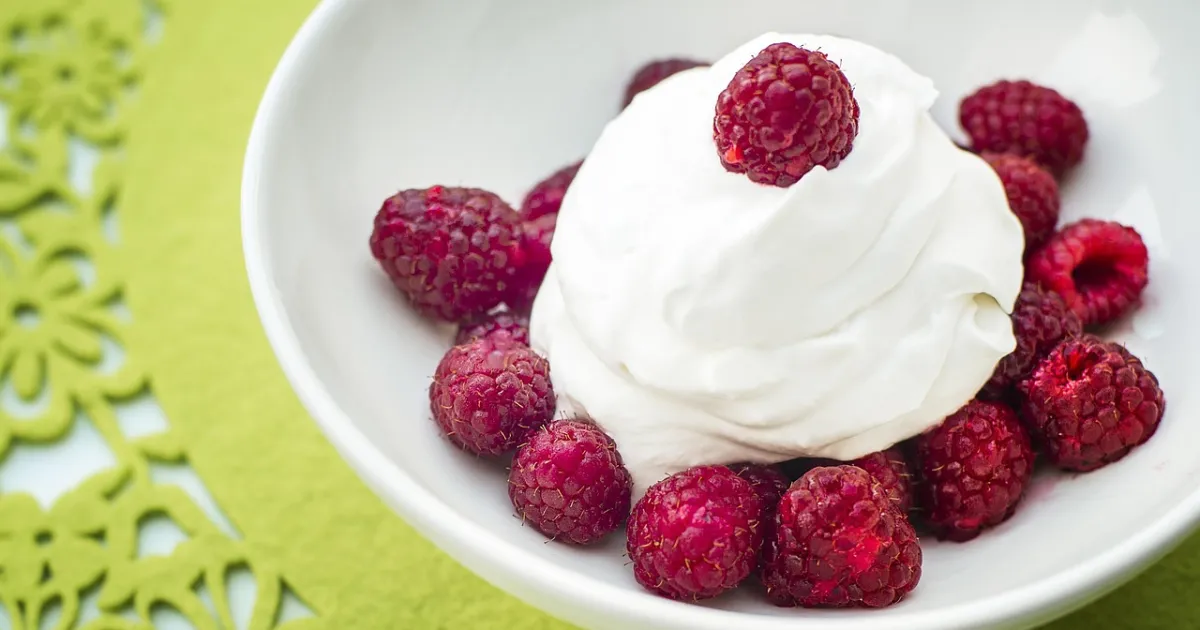
There are three common ways to make vegan whipped cream. Whip the firm cream from a chilled can of coconut cream for a rich topping that holds its shape. Whip aquafaba with cream of tartar and sugar for a foam with no fat in it, lighter and shorter-lived. Or whip a carton of plant-based whipping cream the way you would dairy cream. Aquafaba needs an electric mixer, and the other two need everything cold.
What whipped cream is, and what the fat does
US food standards reserve the plain name. Under 21 CFR 131.25, “whipped cream” should be applied only to a product made by whipping cream that meets the standards for whipping cream: heavy cream, with not less than 36 percent milkfat (§ 131.150), or light whipping cream, with at least 30 but less than 36 percent (§ 131.157). Whipped cream is a dairy food by definition, and a vegan version has to get its structure some other way.
In dairy cream that structure comes from fat. As the cream is beaten, partially coalesced fat forms a network that traps air bubbles, and the foam ends up at about twice the volume of the liquid; milk and low-fat cream do not have enough fat to do it. King Arthur Baking adds the practical half: the fat has to stay solid, which is why cold cream gives loftier peaks. Beat past stiff peaks and the fat clumps together, the air is forced out and the foam starts to collapse.
Way 1: coconut whipped cream
Coconut cream is the plant ingredient that behaves most like dairy cream here; King Arthur describes it as matching dairy cream in thickness and in its ability to whip. Its fat is coconut oil, a white solid below about 77°F (25°C) and a thin liquid above that, so the can has to be thoroughly cold before you start. Recipes call for a night in the refrigerator.
- 1 can (13.5 to 14 ounces, 400 ml) unsweetened coconut cream, refrigerated overnight
- 2 to 4 tablespoons (14 to 28 g) confectioners' sugar
- ½ teaspoon vanilla extract
- Chill the mixing bowl and beaters for 10 to 15 minutes.
- Open the can without shaking it. If there is a layer of thin liquid, leave it behind and scoop only the firm cream into the bowl. Full-fat canned coconut milk can be used the same way, but it gives less firm cream and more liquid.
- Beat on medium-high speed until the cream is smooth and the beaters begin to leave tracks, about 1 minute.
- Add the sugar and vanilla and beat until the cream holds a medium peak, a point that stands up with its tip curling over. This takes another minute or two. Stop there. One can gives enough to top a 9-inch (23 cm) pie.
Sweeten with confectioners' sugar, as the published recipes do. If the cream is so stiff that it clumps, beat in a spoonful of the liquid left in the can. Covered and refrigerated, coconut whipped cream firms up as it sits, so whisk it briefly before serving. Recipes disagree on how long it keeps, and one widely used recipe gives 1 to 2 weeks; we use it within a few days.
Way 2: aquafaba whipped cream
Aquafaba, the liquid from a can of chickpeas, whips into a white foam much as egg whites do. It is a foam without fat, so the result is closer to a soft meringue than to cream: light, sweet and at its best soon after it is made. Our aquafaba guide covers what it is and how else to bake with it.
- ½ cup (113 g) aquafaba from canned chickpeas, cold
- ½ teaspoon cream of tartar
- ¼ cup (28 g) confectioners' sugar
- 1 teaspoon vanilla extract
- Check the liquid first. It should be about as thick as lightly whisked egg white. If it is watery, simmer it until it thickens a little and let it cool completely.
- Beat the aquafaba and cream of tartar with an electric mixer on high speed until white and foamy, 1 to 2 minutes.
- Add the sugar a tablespoon at a time, then the vanilla, and keep beating until the foam is glossy and holds stiff peaks. Allow 5 to 10 minutes in all.
Do not skip the cream of tartar. In King Arthur's tests it shortened the whipping time, and aquafaba whipped without it deflated much more quickly; their ratio is ⅛ teaspoon for every 2 tablespoons of liquid. They also call for an electric mixer, because stiff peaks are out of reach by hand, and suggest abandoning a batch that has not come together after 10 to 15 minutes. The vanilla earns its place too, since plain aquafaba can taste of beans.
Serve the foam right away for the best texture. Published recipes say it holds in the refrigerator for some hours, up to about a day, and can be whipped again if it slackens.
Way 3: plant-based whipping cream from a carton
Non-dairy whipping products are sold as liquids in cartons as well as frozen in tubs and in aerosol cans. They are typically built from vegetable oil, water and sweeteners, with stabilizers and emulsifiers added. Chill the carton, the bowl and the beaters, beat on medium-high speed, and watch for the stages you would see in dairy cream: trails that begin to overlap, then soft peaks, then a thick, spreadable foam that clings to the beaters. Add 1 to 2 tablespoons (7 to 14 g) confectioners' sugar per cup once the cream starts to thicken. Taste first, because some cartons are already sweetened, and read the ingredient list, because some cream substitutes mix dairy and non-dairy ingredients.
Which one to use where
| Method | What holds the foam | Time at the mixer | How long it holds | Best for |
|---|---|---|---|---|
| Coconut cream | Solid coconut fat | 2 to 3 minutes | A few days chilled; softens in a warm room | Pies, shortcake, filling a chilled cake |
| Aquafaba | Chickpea proteins and carbohydrates, no fat | 5 to 10 minutes | Best right away | Spooning over fruit and puddings at the table |
| Carton plant cream | Vegetable fat with stabilizers and emulsifiers | See the carton | See the carton | Piping and recipes written for dairy whipped cream |
Coconut cream is our first choice for a slice of vegan pumpkin pie, where a little coconut flavor is welcome. Because coconut oil turns liquid at warm room temperature, keep the topping in the refrigerator until serving and do not put it on anything warm. Aquafaba is the answer when coconut is not wanted. For cream as a pourable ingredient in doughs and ganache, see vegan heavy cream.
When it goes wrong
- Coconut cream that stays soupy was not cold enough, or came from a lite coconut milk with too little fat. Chill the cream and the bowl again before a second try.
- Coconut cream that turns grainy or separates was beaten too long. Stop at medium peaks.
- Aquafaba that will not rise was probably too thin. Reduce the liquid on the stove, cool it and start again. Without cream of tartar it takes longer to whip and deflates sooner.
- Aquafaba foam loses volume as it stands, so spoon it on at the last minute.
Questions
Is whipped cream vegan?
No. In US standards the name belongs to whipped dairy cream with at least 30 percent milkfat. Toppings sold as non-dairy are a separate group of products, and some cream substitutes still contain milk ingredients, so check the label.
Can I make vegan whipped cream without coconut?
Yes. Aquafaba whipped with cream of tartar and confectioners' sugar uses no coconut. Carton whipping creams vary, and some are made with coconut oil, so read the ingredient list.
Why does the can of coconut cream have to be chilled?
Coconut oil is solid below about 77°F (25°C) and liquid above it. Cream that has not firmed up in the cold is too soft to whip, which is why recipes chill the can overnight.
How long does vegan whipped cream keep?
Keep coconut whipped cream in a covered container in the refrigerator; recipes give keeping times of up to 1 to 2 weeks, and we use it within a few days. Aquafaba foam is best the day it is whipped, and recipes say it can be whipped again if it slackens. For a carton product, follow the date and directions on the pack.