What Is Aquafaba? How to Use It in Vegan Baking
Aquafaba is the thick liquid drained from a can of chickpeas. Whipped, it makes meringue without eggs. Here are the amounts to use, a basic meringue, and the bakes where it does not hold up.
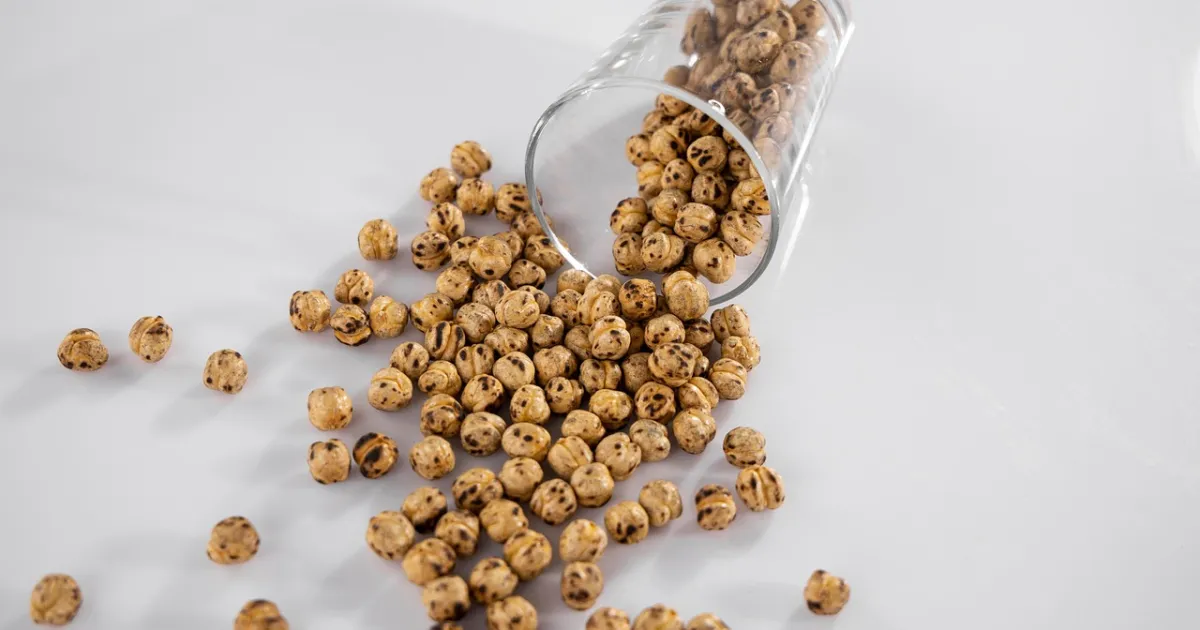
Aquafaba is the thick liquid left after chickpeas or other legumes have been cooked, the same liquid you pour off a can of chickpeas. Beaten with a mixer it foams and holds peaks the way egg white does, which makes it the usual vegan stand-in for whipped whites. The working amounts are 2 tablespoons (28 g) for one egg white and 3 tablespoons (43 g) for one whole egg.
Where it comes from
The name joins the Latin words for water and bean. The ingredient is recent: in December 2014 the French musician Joël Roessel reported that the water from canned beans could be whipped into a foam, and in March 2015 the vegan food enthusiast Goose Wohlt published a meringue made from nothing but chickpea liquid and sugar. Wohlt also coined the word.
Any can of chickpeas supplies it. You can also collect the cooking water from dried chickpeas, although The Vegan Society notes that homemade aquafaba is generally watery and has to be boiled down to a thicker consistency first. King Arthur Baking also recommends the canned kind, calling the homemade version much less reliable.
Why it whips
While chickpeas cook, water-soluble proteins and sugars move out of the seeds and into the water; up to about 5 percent of the dry weight of each chickpea ends up there, according to McGill University's Office for Science and Society. What is left is a liquid that is 90 to 95 percent water, with the rest mostly carbohydrates and protein.
Protein gets most of the attention in studies of the foam. A 2024 systematic review in the Journal of Food Science and Technology explains that some parts of a protein interact with water while others stabilize the boundary with air, and that the foaming capacity of aquafaba correlates strongly with its protein content. McGill adds that saponins, plant compounds named for their soap-like foam, are among the components most important to the effect. King Arthur's bakers, for their part, write that the science is not yet entirely clear.
The limit comes from the same chemistry. Aquafaba has about a tenth of the protein of egg white, so it cannot replace the cooked egg protein that holds up an angel food cake.
How much to use
| To replace | Aquafaba | Notes |
|---|---|---|
| 1 egg white | 2 tablespoons (28 g) | Whip to peaks for meringue and frostings |
| 1 whole egg | 3 tablespoons (43 g) | Stir in unwhipped as a binder |
| 1 whole egg, King Arthur's measure | 1/4 cup (57 g) | From King Arthur's egg-free baking guide |
The Vegan Society and King Arthur agree on 2 tablespoons per white. For a whole egg the Society uses 3 tablespoons and King Arthur 1/4 cup, so anything in that range is normal.
How to whip it
- Choose chickpeas canned without salt. Salted liquid makes salty meringues, and the 2024 review reports that aquafaba from cans with no added salt or additives gave denser, more stable foam.
- Chill the liquid. The Vegan Society notes that aquafaba whips more quickly cold.
- Use an electric mixer and a large, clean bowl.
- Add cream of tartar, 1/8 teaspoon for every 2 tablespoons of aquafaba. The review notes that this acidic ingredient increased both foam and stability.
- Give it time. McGill puts semi-firm peaks at 3 to 6 minutes; stiff peaks take longer than they do with egg whites. If it is still not whipping up after 10 to 15 minutes, King Arthur suggests starting again with another can.
Raw aquafaba can smell and taste of beans. Vanilla or almond extract covers it.
A basic aquafaba meringue
This is the recipe to learn the ingredient on. You need 1/2 cup (113 g) of aquafaba, which one 15-ounce (425 g) can of unsalted chickpeas supplies with some to spare; 1/2 teaspoon cream of tartar; 2/3 cup (132 g) granulated sugar, superfine if you have it; and 1 teaspoon vanilla extract.
- Heat the oven to 225°F (110°C) and line one or two half-sheet pans (18 x 13 inches) with parchment.
- Put the cold aquafaba and the cream of tartar in a large bowl and beat on high speed until the foam is white, thick and holds soft peaks. Allow 5 minutes or more.
- With the mixer running, add the sugar a tablespoon at a time. Keep beating until the meringue is glossy and stands in stiff peaks, then beat in the vanilla.
- Spoon or pipe tablespoon-size mounds onto the parchment, about 1 inch (2.5 cm) apart.
- Bake for 1 1/2 hours, then test one. The meringues are done when they feel dry and firm, not tacky, and lift off the parchment cleanly. If they are still sticky, give them up to 30 minutes more.
- Turn the oven off and leave them inside for at least 1 hour to cool and finish drying. Store airtight.
Aquafaba recipes: where it works and where it fails
Whipped aquafaba is at its best when it is the star and nothing heavy leans on it: meringue kisses, marshmallow spread and Swiss buttercream all came out well in King Arthur's tests, and King Arthur also suggests aquafaba meringue for pavlova. Folded into vegan pancakes, it makes them lighter, though more delicate.
It fails in bakes that rely on whipped whites for structure. King Arthur's angel food cake made with aquafaba collapsed in the oven, chiffon cake disappointed in the same way, and flourless cookies spread into a thin, sticky layer. Macarons are disputed: The Vegan Society lists them among aquafaba's uses, while King Arthur calls its own results lackluster.
Unwhipped, aquafaba works as a simple binder. The Vegan Society stirs it straight into cookies, cakes, muffins, bread and brownies. King Arthur notes that it adds no flavor or color to the finished bake and not much structure, so for plain binding a flax egg is the other standard option. Our guide to egg substitutes for baking sets the options side by side.
Storing it
Aquafaba keeps for a few days in a clean, airtight container in the refrigerator. For longer storage, freeze it unwhipped in an ice cube tray and move the cubes to a bag. Measure 1 tablespoon into each well and you can count out what a recipe needs.
Questions
Can I use the liquid from other beans?
Liquid from white beans such as cannellini can work too. The Vegan Society notes that chickpeas and white beans give a lighter aquafaba, while liquid from darker beans such as kidney or black beans can darken the result. King Arthur Baking suggests staying away from very dark beans.
Does aquafaba taste like beans?
Uncooked, it can. King Arthur Baking reports that the bean flavor does not come through in the finished bake, and a little vanilla or almond extract takes care of meringue and frosting.
Can I use the water from chickpeas I cooked myself?
You can, but it is generally watery. Simmer it until it thickens, let it cool, and then measure and whip it as usual.
What is a flax egg, and when is it the better choice?
A flax egg is ground flaxseed mixed with water until it gels. It binds cookies, muffins and quick breads well but cannot be whipped, so use flax for binding and aquafaba for foam.
Sources
- The Vegan Society: Aquafaba, what it is, how to use it and some great recipes
- King Arthur Baking: A guide to aquafaba
- King Arthur Baking: Our best recipes and tips for baking egg free
- McGill University Office for Science and Society: What is Aquafaba?
- Journal of Food Science and Technology (2024): Chickpea aquafaba, a systematic review
- Wikipedia: Aquafaba