Vegan Fudge: A Chocolate Recipe and How to Get It to Set
Fudge is normally made from sugar, butter and milk. A vegan batch can be melted together from dark chocolate and condensed coconut milk in a few minutes, or cooked the old way to the soft-ball stage.
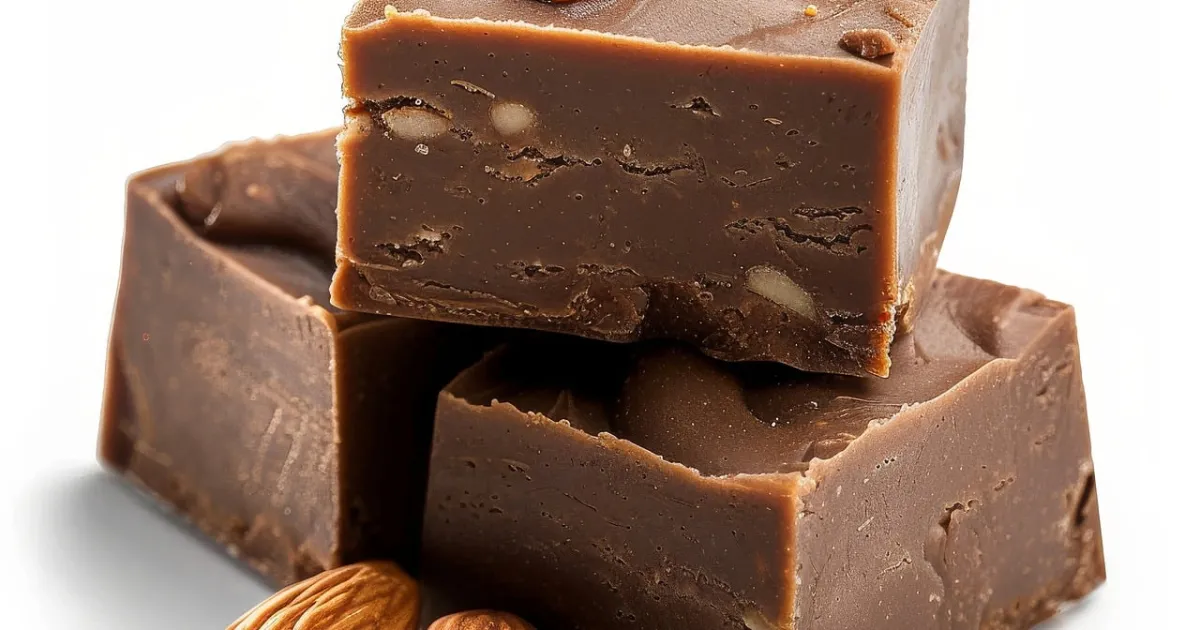
Traditional fudge is not vegan, because its basic ingredients are sugar, butter and milk. Vegan fudge is made in one of two ways. The quick way melts dark chocolate into sweetened condensed coconut milk and lets the refrigerator do the setting, with no thermometer involved. The old-fashioned way boils sugar with plant milk to the soft-ball stage, 235 to 240°F (113 to 116°C), lets it cool and then beats it. The recipe on this page is the quick one; the cooked method and its temperatures are explained after it.
Is fudge vegan?
Usually not. A basic fudge preparation contains milk, butter and sugar, and cream may take the place of the milk. The Exploratorium's classic chocolate fudge, for instance, calls for a cup of half-and-half and 3 tablespoons of butter to 3 cups of sugar. Quick recipes replace the boiling with sweetened condensed milk, which is also dairy.
For packaged fudge, the label answers faster than the name does. In the US milk is a major food allergen and on packaged food must be named either in the ingredient list or in a "Contains" statement next to it, so butter, cream, condensed milk and whey show up there as milk. Fudge cut to order at a counter may carry no such label, so ask. The chocolate is a separate question, and the site's is chocolate vegan article covers what to look for.
Two ways fudge sets
Classic fudge is a crystalline candy. The Exploratorium's candy pages describe its firm, smooth texture as the work of tiny sugar microcrystals, small enough that the tongue does not feel them as grain. Getting those crystals takes three stages: boil the syrup to the soft-ball stage, let it cool undisturbed to about 110°F (43°C), then stir until it thickens. Stirring at that point creates a great many crystal seeds at once, and many small crystals are what make the candy smooth.
The quick method skips all of that. Melted chocolate and condensed milk are stirred together, poured into a pan and chilled until firm. The Exploratorium itself raises the question of whether this technically counts as fudge. Whatever the name, it has no temperature to miss, which makes it the sensible first batch.
Vegan chocolate fudge recipe
No thermometer needed. Makes about 24 small squares.
- 14 ounces (397 g) dairy-free dark or semisweet chocolate, chopped, or about 2 1/3 cups of chips
- 1 cup (320 g) sweetened condensed coconut milk
- 1 teaspoon vanilla extract
- 1/4 teaspoon table salt
- 1/2 cup (57 g) chopped walnuts, optional
- Line a 9×5-inch (23×13 cm) loaf pan with parchment, leaving the paper long on two sides so you can lift the block out.
- Put the condensed coconut milk and the chocolate in a heavy saucepan over the lowest heat. Stir constantly until the chocolate has just melted and the mixture is smooth and glossy, then take the pan off the heat at once. In a microwave, heat in 30-second bursts and stir between each.
- Stir in the vanilla, the salt and the nuts.
- Scrape the mixture into the pan and level the top.
- Refrigerate for 2 to 3 hours. The fudge is ready when the surface has turned matte, a fingertip leaves no dent, and the block lifts out in one piece.
- Cut into squares with a sharp knife. Keep the fudge in the refrigerator.
Cans of condensed coconut milk are not a standard size, so measure the cup instead of trusting the can. A homemade batch of the cooked-down coconut version from the site's vegan condensed milk article can be used the same way; the quick soy version there is too thin for fudge.
Cooking fudge the old-fashioned way
This page gives no quantities for a cooked batch; what follows describes the method. Wikipedia's article on fudge lists plant milks as a substitute for the milk and margarine as a substitute for the butter, and vegan butter is the dairy-free choice there. The temperature targets are the Exploratorium's, given for its dairy fudge, and they describe the sugar syrup. As a syrup boils, water leaves, the sugar concentration climbs and the temperature rises with it, and the highest temperature reached decides how firm the candy will be when cold.
- Cook to the soft-ball stage, 235 to 240°F (113 to 116°C), where the syrup is about 85 percent sugar. A little dropped into cold water forms a soft ball that flattens when you take it out.
- Stop stirring once the syrup boils, and wash down the sides of the pan with a wet pastry brush to dissolve stray crystals.
- Off the heat, leave the pan alone until the syrup has cooled to about 110°F (43°C). Then stir steadily until the fudge loses its gloss and stiffens, which can take 15 to 20 minutes, and press it into the pan.
- Check the thermometer first in plain boiling water. At sea level it should read 212°F (100°C); at altitude, subtract 1°F from every target for each 500 feet.
How to adjust it
For a dark vegan fudge that is less sweet, use chocolate of about 70 percent cocoa. For a softer square, drop the chocolate to 12 ounces (340 g), the ratio some published two-ingredient recipes use. Half a teaspoon of peppermint extract can replace the vanilla, and any chopped nut can replace the walnuts. One and a half times the recipe fills an 8-inch (20 cm) square pan.
What goes wrong
| Problem | Likely cause | What to do |
|---|---|---|
| Quick fudge too soft to cut | Short chill, or less chocolate than the recipe asks for; cups of chips are imprecise | Chill longer. If it is still soft, melt it again gently with 2 ounces (57 g) more chocolate, and weigh the chocolate next time |
| Cooked fudge is grainy | It was stirred while cooling, so crystals formed early and grew large, or it was beaten too long or too hard at the end | Leave it untouched until it reaches about 110°F (43°C), and wash down the pan sides while it boils |
| Cooked fudge never firms up | The syrup came off the heat below the soft-ball stage | Check the thermometer in boiling water and allow for altitude |
| Cooked fudge is dry | The syrup got too hot | Take the pan off the heat inside the soft-ball range, 235 to 240°F (113 to 116°C) |
The Exploratorium also advises against making cooked fudge on a rainy or humid day.
Questions
Is fudge vegan?
Standard fudge contains butter and milk or cream, so it is not. Vegan fudge replaces them with plant milk, vegan butter or condensed coconut milk, and the chocolate has to be dairy-free as well.
Do I need a candy thermometer to make vegan fudge?
Not for the chocolate and condensed coconut milk method, which only needs melting and chilling. Cooked fudge does need one, or the cold-water test: a drop of syrup should form a soft, flexible ball.
Why is my fudge grainy?
In cooked fudge, sugar crystals formed too soon and grew large, usually because the pan was stirred while the syrup cooled. Stirring should start only at about 110°F (43°C).
How should vegan fudge be stored?
Keep the condensed coconut milk kind in an airtight container in the refrigerator. The Exploratorium stores its classic cooked fudge at room temperature in an airtight container, between layers of waxed paper.