Is Chocolate Vegan? Dark, Milk and White Chocolate and What to Check on the Label
Chocolate starts as a plant product. Milk and white chocolate contain dairy by federal definition, and dark chocolate is allowed to. The ingredient list and the allergen statement tell you which bar is which.
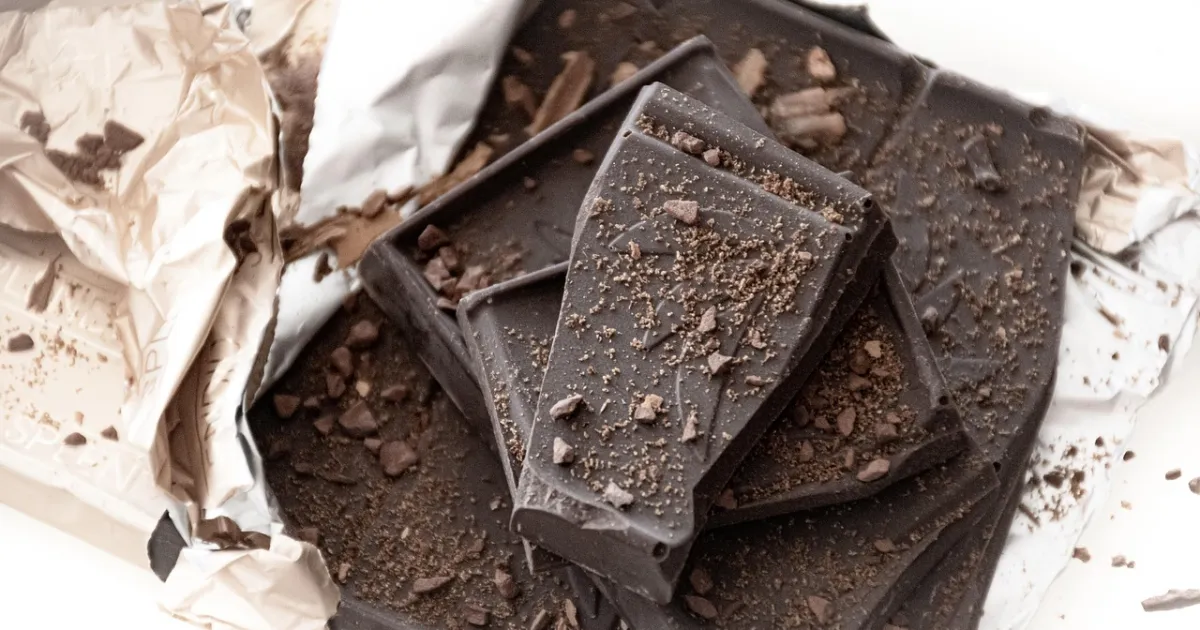
Sometimes. Chocolate starts out vegan, because cacao beans, the fat pressed from them and sugar are all plant ingredients. Milk chocolate and white chocolate contain dairy by definition under US food standards. Dark, semisweet and bittersweet chocolate may or may not, since the same standards let a manufacturer add milk ingredients to them. The ingredient list settles it bar by bar.
What chocolate is made of
Chocolate comes from the seeds of the cacao tree. The beans are fermented, dried, cleaned and roasted, and the shell is removed to leave the nibs. Grinding the nibs produces chocolate liquor, a paste that the federal standard requires to be 50 to 60 percent cacao fat. That liquor can be molded as unsweetened baking chocolate, or separated into cocoa butter and cocoa powder.
Cocoa butter is the fat of the bean itself and has nothing to do with dairy butter; there is more on that in our article on whether cocoa butter is vegan. Add a sweetener to chocolate liquor and you have sweet or dark chocolate. Add milk as well and it becomes milk chocolate. White chocolate is cocoa butter, milk and sweetener without the dark cocoa solids.
What the federal standards say
In the United States the names on a chocolate wrapper are defined in the standards of identity for cacao products, 21 CFR Part 163. Each standard sets a minimum of cacao and lists the ingredients a manufacturer may add.
| Name on the label | Minimum cacao content | Dairy |
|---|---|---|
| Unsweetened, bitter or baking chocolate | Ground cacao nibs, 50 to 60 percent cacao fat | Optional: butter or milkfat may be added |
| Sweet chocolate | 15 percent chocolate liquor | Optional, under 12 percent milk solids |
| Semisweet or bittersweet chocolate | 35 percent chocolate liquor | Optional, under 12 percent milk solids |
| Milk chocolate | 10 percent chocolate liquor | Required: at least 3.39 percent milkfat and 12 percent milk solids |
| White chocolate | 20 percent cacao fat | Required: at least 3.5 percent milkfat and 14 percent milk solids |
| Cocoa | Ground nibs with part of the fat removed, 10 to 22 percent cacao fat | None among the permitted ingredients |
Two points follow from the table. A product that meets the standard for milk chocolate or white chocolate always contains dairy, and a bar made without dairy does not meet either definition, whatever the front of the wrapper calls it. And Part 163 has no standard called dark chocolate. Bars sold as dark fall under sweet, semisweet or bittersweet chocolate, where dairy is optional. The FDA puts it plainly in a consumer update last revised in October 2020: "Milk is a permitted ingredient in dark chocolate" (FDA, Allergic to Milk? Some Dark Chocolate Labeled as Dairy-Free May Still Contain Milk).
A high cacao percentage is therefore no guarantee. A bar with a large number on the front is still allowed to list milkfat, and the standard for unsweetened baking chocolate permits butter or milkfat too. Vegan dark chocolate is simply dark chocolate whose maker used none of the optional dairy.
Reading the ingredient list
When you shop for vegan chocolate bars, the front of the wrapper is the least informative part. Dairy is the ingredient to look for, and US law gives you two places to find it. Milk is one of the nine major food allergens, so its source must be declared, either in parentheses after the ingredient, as in whey (milk), or in a statement next to the ingredient list, as in Contains wheat, milk, and soy.
The dairy ingredients the chocolate standards name are a useful checklist: cream, milkfat, butter, milk, dried milk, nonfat dry milk, concentrated or dried buttermilk and malted milk. White chocolate may also contain whey.
Under the standard, a dark chocolate is built from chocolate liquor (which may also be declared as chocolate or unsweetened chocolate), a sweetener and a few optional extras: added cacao fat, flavorings and emulsifying agents. The standards cap emulsifiers at 1 percent of a dark or milk chocolate, and the FDA's own labeling example, lecithin (soy), shows how the source of one is declared. Sugar raises a separate question about how it was refined, which we cover in is sugar vegan.
What may contain milk means
A dark bar with no dairy in its ingredient list may still say that it may contain milk or was made in a facility that also uses it. According to the FDA, statements of this kind are not required by law; manufacturers use them to address cross-contact, the inadvertent introduction of an allergen into a product. The agency notes that most dark chocolate is produced on equipment that is also used for milk chocolate.
The FDA has measured the result. It surveyed dark chocolate products collected in 2018 and 2019 that were labeled dairy-free or carried similar claims. Four of the 52 products sampled contained potentially hazardous levels of milk allergen, and all four were recalled.
Whether a bar is vegan and whether it is free of milk traces are two separate questions, and The Vegan Society treats them separately. The Society's Vegan Trademark standards require brands to minimise cross-contamination but do not demand separate facilities, and the Society says many registered products carry a precautionary milk statement for that reason. It also warns that a vegan claim is not an allergen claim. Anyone avoiding milk because of an allergy is dealing with a different question; the FDA's advice in that case is to read every statement on the label and contact the manufacturer.
Choosing chocolate for baking
Chocolate chips, chunks and baking bars are covered by the same standards as eating chocolate, so the same check applies. Semisweet chips are allowed to contain milk or milkfat. An unsweetened baking bar is allowed to contain butter or milkfat. Read the list each time you buy, since the standards leave that choice to the manufacturer. Once you have a bag that passes, it goes straight into vegan chocolate chip cookies.
Plain cocoa powder is the simplest case. The standard for cocoa permits alkali, neutralizing agents, spices, flavorings and salt as added ingredients, with no dairy among them. The words Processed with alkali on a canister describe that optional treatment and say nothing about animal ingredients. Sweetened drink mixes are a different product with their own ingredient list.
Coatings sold for dipping and drizzling deserve a second look. The standards for sweet chocolate and vegetable fat coating allow dairy-derived ingredients as well as vegetable fats other than cocoa butter.
Questions
Is dark chocolate vegan?
It can be, but not by rule. US standards allow milk ingredients in sweet, semisweet and bittersweet chocolate, so a dark bar may list milkfat or another milk ingredient. A bar with no milk in its ingredient list and none in a Contains statement has no dairy among its declared ingredients.
Is white chocolate vegan?
Not if it meets the US standard for that name. The federal standard requires white chocolate to contain at least 3.5 percent milkfat and 14 percent total milk solids. A dairy-free bar sold as an alternative to white chocolate falls outside that definition, so read what it is made of.
Does <em>may contain milk</em> mean a chocolate is not vegan?
The statement is a voluntary warning about possible cross-contact on shared equipment, not a declaration of an ingredient. The Vegan Society registers products that carry it. For a milk allergy the statement matters in a different way, and the FDA's consumer pages explain how to read it.
Is cocoa powder vegan?
Plain cocoa is ground cacao nibs with part of the fat removed, and the federal standard lists no dairy among its permitted ingredients. Hot cocoa mixes are a different product, so check their labels separately.