Flax Egg: How to Make One and When It Works in Baking
One tablespoon of ground flaxseed and three tablespoons of water replace one egg as a binder in cookies, muffins and quick breads. Here is the method, why the mixture gels and where it falls short.
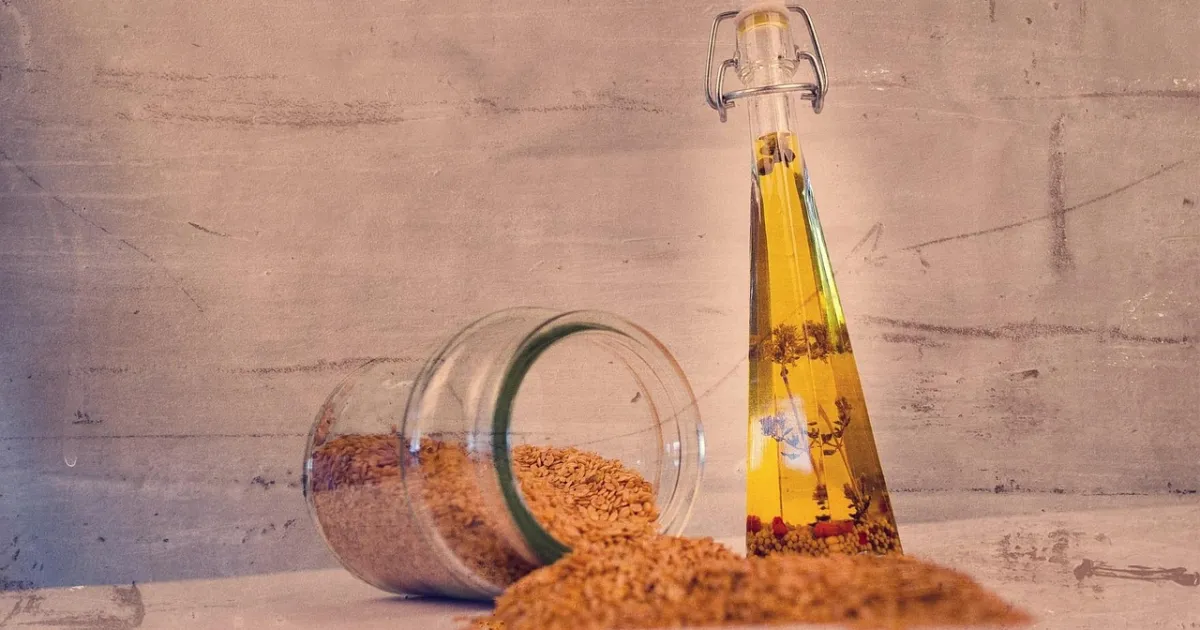
A flax egg is 1 tablespoon (7 g) of ground flaxseed stirred into 3 tablespoons (43 g) of water and left for 5 to 10 minutes, until the mixture turns thick and gelatinous. That quarter cup of gel stands in for one large egg wherever the egg's job is to bind: cookies, muffins, quick breads, brownies and pancakes. It adds body and holds a crumb together, but it cannot be whipped and it does not give a tall cake its structure.
How to make a flax egg
- Start with ground flaxseed, sold as flax meal or milled flaxseed, or grind whole seeds in a spice or coffee grinder. The finer the meal, the better it works.
- For each egg, measure 1 tablespoon (7 g) of flax meal into a small bowl and add 3 tablespoons (43 g) of cool or room-temperature water.
- Stir with a fork until no dry pockets remain.
- Let it stand for 5 to 10 minutes and stir once more. It is ready when it has thickened to something close to raw egg white and clings to the fork instead of running off it.
- Add it to the recipe along with the other wet ingredients.
The ratio is close to universal. King Arthur Baking and the extension services of the University of Illinois and the University of Maine all give 1 tablespoon of flax meal to 3 tablespoons of water per egg; one Vegan Society article uses 2 tablespoons of water. The sources differ more on the rest: Illinois says 5 minutes, King Arthur 5 to 10, and an older King Arthur article lets the gel sit for about 30 minutes, noting that it keeps thickening. If your gel still looks watery after 10 minutes, give it longer.
| Eggs replaced | Ground flaxseed | Water |
|---|---|---|
| 1 | 1 tablespoon (7 g) | 3 tablespoons (43 g) |
| 2 | 2 tablespoons (14 g) | 6 tablespoons (85 g) |
| 3 | 3 tablespoons (21 g) | 1/2 cup plus 1 tablespoon (128 g) |
One egg is roughly 1/4 cup, or 4 tablespoons, by volume, which is why the two measures of a flax egg add up to the same amount.
Why it gels
Flaxseed carries a layer of mucilage in the outer coat of the seed. A 2015 review in the Journal of Food Science and Technology describes this mucilage as mostly water-soluble polysaccharides with a very high water-binding capacity, reported at 1,600 to 3,000 g of water per 100 g of solids, and with functional properties similar to guar gum. Stirred into water, they bind it and thicken the liquid into a gel.
That explains both what a flax egg can do and what it cannot. A real egg has several jobs in a batter. King Arthur lists them: eggs provide structure, particularly in cakes, and they emulsify, bind and leaven. The gel takes over the binding and holds on to moisture, and that is where it stops. Flax eggs "add body and help bind baked goods but don't build structure" (King Arthur Baking, No eggs? Here's your guide for substituting), and the same guide notes that they do not aerate well.
Where a flax egg works
Use it where the crumb is meant to be soft, moist and fairly low. King Arthur names cookies, quick breads, yeast breads, brownies and bars, and muffins; its earlier article adds pancakes and plain sandwich loaves and buns. The review cited above mentions pancakes, muffins and cookies. A loaf such as vegan banana bread, which already gets moisture from the fruit, is a typical good fit.
Expect small changes. The University of Maine team, which baked a two-egg yellow cake with several substitutes, found that flax did not affect the flavor but that the seeds were visible in the batter. King Arthur's test muffins came out speckled yet fairly fluffy, with a good rise, and its gluten-free brownies made with flax gel were noticeably moister than the egg version. The review describes baked goods made this way as slightly gummier and chewier, with lower volume.
Where it does not
A flax egg is the wrong tool for anything that depends on eggs for lift or structure.
- Light, fluffy cakes. King Arthur calls flax eggs not ideal here because they do not aerate.
- Egg-rich breads such as brioche.
- Anything built on whipped egg whites. Meringue calls for aquafaba, which King Arthur describes as pretty much the only egg substitute that whips up like egg whites.
- Recipes with many eggs. The more eggs you replace, the more the result drifts from the original, and replacing one is far less noticeable than replacing three.
For recipes outside this range, our guide to egg substitutes for baking compares the other options.
Getting more lift, and choosing the flax
When the egg in a recipe was also there to help it rise, as in cookies, University of Illinois Extension suggests adding 1/2 teaspoon of baking powder to the flax egg: 1 tablespoon flax, 3 tablespoons water and the baking powder for each egg replaced.
Flaxseed comes in brown and golden varieties. Brown flax meal gives a stronger whole-grain flavor, a darker color and visible flecks, which suits oatmeal cookies and bran muffins and shows in a pale vanilla crumb.
Storage matters more for the meal than for the seed. Whole flaxseed is chemically stable, but ground flaxseed left open at room temperature can turn rancid in as little as a week. Keep flax meal in a sealed container in the refrigerator, and smell it before you bake. Mix the flax egg itself when you need it; it takes less time than preheating the oven.
Questions
What is a flax egg?
It is an egg replacement made from ground flaxseed and water, 1 tablespoon to 3 tablespoons, rested until it gels. It replaces one egg as a binder in baking and contains no egg at all.
Can I use whole flaxseed instead of ground?
Grind it first. The methods cited here call for flax meal or ground seed, and King Arthur notes that a finer grind works better. A spice or coffee grinder does the job.
Can I use chia seeds the same way?
Yes. King Arthur and University of Illinois Extension give the same ratio for chia: 1 tablespoon of seeds to 3 tablespoons of water. King Arthur uses the chia seeds whole.
How many eggs can a flax egg replace?
There is no fixed limit, but King Arthur Baking notes that replacing one egg is far less noticeable than replacing three. The University of Maine's test cake, for comparison, replaced two eggs.
Sources
- King Arthur Baking: No eggs? Here's your guide for substituting
- King Arthur Baking: How to make homemade egg replacer
- University of Illinois Extension: Egg substitutes when baking
- University of Maine Cooperative Extension: Using Egg Substitutes in Baking and Cooking
- Kajla, Sharma and Sood: Flaxseed, a potential functional food source (Journal of Food Science and Technology, 2015)
- Wikipedia: Flax