Vegan Cinnamon Rolls: Soft Dough, Filling and Icing
Cinnamon roll dough usually contains milk and butter, and some canned rolls contain whey. This recipe makes 12 rolls with plant milk and vegan butter, and explains what the yeast needs.
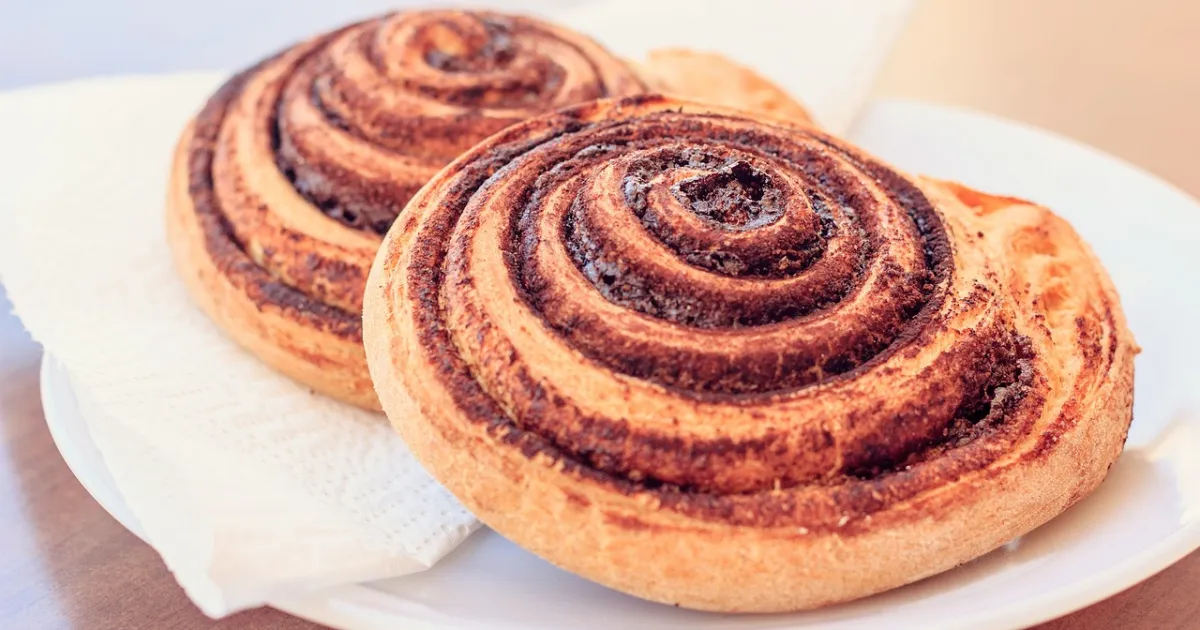
Vegan cinnamon rolls are made from a soft yeast dough in which plant milk and vegan butter or coconut oil replace the dairy, rolled around brown sugar and cinnamon and finished with a confectioners' sugar icing. No egg replacer is involved. The recipe below fills a 9 x 13-inch (23 x 33 cm) pan with 12 rolls and takes about 3 1/2 hours, most of it rising time.
What makes ordinary cinnamon rolls non-vegan
Dairy, in several places. King Arthur Baking's standard cinnamon rolls have dry milk and 6 tablespoons (85 g) of butter in the dough, milk brushed over the rolled-out sheet, and heavy cream or milk in the glaze. That recipe has no eggs, which is why a vegan version needs so few changes; bakery rolls may add eggs or an egg wash, so ask.
Refrigerated dough in a can is worth a close read. The ingredient list of Pillsbury Cinnamon Rolls with Original Icing (8 count), as shown on the maker's website in November 2026, includes modified whey, and the allergen statement names wheat and milk. The same list has a dough conditioner, L-cysteine hydrochloride. According to Wikipedia's article on cysteine, most L-cysteine is produced industrially from animal materials such as poultry feathers or hog hair, though a synthetic form made by fermentation also exists. This label does not say which one was used. If milk were not already there, that ingredient alone would be a reason to write to the manufacturer.
Ingredients
Dough
- 1 cup (227 g) unsweetened soy or oat milk, warmed to about 100°F (38°C)
- 4 tablespoons (57 g) vegan butter or coconut oil, melted
- 1/4 cup (50 g) granulated sugar
- 2 1/4 teaspoons (7 g) instant yeast
- 1 teaspoon (6 g) table salt
- 3 1/4 cups (390 g) all-purpose flour, plus a little for rolling
Filling
- 3 tablespoons (43 g) vegan butter, very soft
- 1/2 cup (107 g) packed light brown sugar
- 1 tablespoon (8 g) ground cinnamon
Icing
- 1 cup (113 g) confectioners' sugar
- 1 1/2 to 2 tablespoons (21 to 28 g) plant milk
- 1/2 teaspoon (2 g) vanilla extract
For the fat, see the guide to vegan butter. Whether the sugar itself is vegan is a separate matter, covered in is sugar vegan.
Method
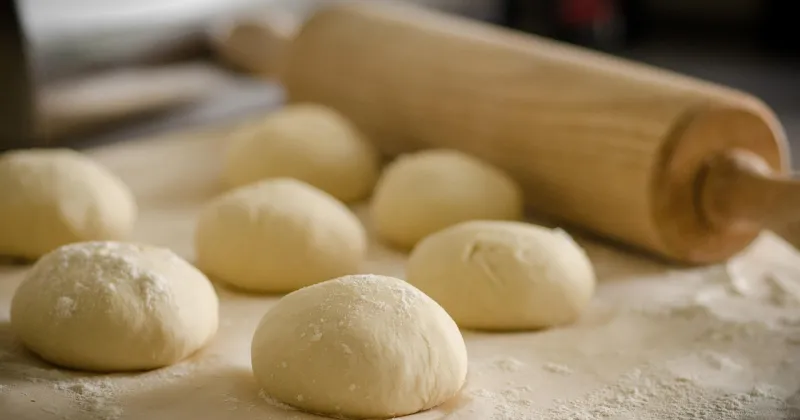
- In a large bowl, stir together the warm milk, melted fat and sugar. Add the yeast, salt and flour and mix until a shaggy dough forms.
- Knead until the dough is smooth, elastic and slightly tacky: 7 to 10 minutes in a stand mixer on its second speed, somewhat longer by hand. Add flour a tablespoon at a time only if the dough sticks badly to your hands.
- Put the dough in a lightly oiled bowl, cover it and let it rise until puffy and nearly doubled, 1 to 1 1/2 hours.
- On a lightly floured counter, roll the dough into a rectangle about 16 x 12 inches (40 x 30 cm). Spread the soft butter over it, leaving a 1/2-inch (1 cm) strip bare along one long edge, and sprinkle on the brown sugar mixed with the cinnamon.
- Roll up from the opposite long edge, pinch the seam and cut the log into 12 equal pieces with a serrated knife.
- Arrange the pieces cut side up in a greased 9 x 13-inch (23 x 33 cm) pan. Cover and let rise until the rolls are puffy and touching, 45 to 60 minutes. Toward the end, heat the oven to 375°F (190°C).
- Bake for 20 to 25 minutes, until golden brown. A thermometer pushed into the center roll should read 190°F (88°C).
- Cool for 10 minutes. Whisk the icing ingredients until smooth and spread over the warm rolls.
| Stage | Time | Sign that it is done |
|---|---|---|
| Kneading | 7 to 10 minutes by mixer | Smooth, elastic, slightly tacky |
| First rise | 1 to 1 1/2 hours | Puffy, nearly doubled |
| Second rise, in the pan | 45 to 60 minutes | Rolls puffy and touching |
| Baking at 375°F (190°C) | 20 to 25 minutes | Golden brown; 190°F (88°C) in the center |
What the yeast and the flour are doing
Yeast feeds on sugar and gives off carbon dioxide, alcohol and organic acids. The gas would escape if nothing held it. Kneading wet flour builds gluten, an elastic protein network, and that network traps the bubbles so the dough swells instead of going flat. This is why the kneading step should not be cut short, and why the dough has to feel stretchy before it rests.
Temperature sets the pace. According to King Arthur's yeast guide, yeast prefers 70 to 100°F (21 to 38°C), and water hotter than 139°F (59°C) kills it. Milk that feels pleasantly warm on your wrist is right; milk that feels hot is not. In a cool kitchen the rises simply take longer, and the guide's advice is to judge the dough by how much it has risen, not by the clock.
Sweet doughs are slower than plain bread. Salt and sugar both hold yeast back, and the same guide puts the limit at roughly 1/4 cup of sugar for 3 cups of flour before the slowdown becomes noticeable. This dough sits just under that line, which is why most of the sweetness is in the filling and the icing.
Choosing the fat, and other adjustments
King Arthur's own vegan cinnamon rolls are made with coconut oil. The recipe allows butter substitutes but warns that the dough will be softer and harder to handle, and suggests greasing your hands and baking a couple of minutes longer. If your dough made with vegan butter feels slack, do as that recipe says and oil your hands instead of working in more flour.
The King Arthur version also begins with a tangzhong: 3 tablespoons (24 g) of flour cooked with 1/2 cup (113 g) of plant milk into a paste, which the recipe credits with improving softness and shelf life. It is an optional extra step for a batch you plan to keep for a couple of days.
To bake in the morning, follow the overnight method in King Arthur's standard recipe: shape the rolls the night before, cover the pan and refrigerate it; the next day, let the rolls stand at room temperature, still covered, for about an hour before they go into the oven. For keeping, King Arthur leaves baked rolls unglazed for up to three days, then reheats them at 350°F (175°C) and ices them before serving.
With a strong cinnamon such as Vietnamese, use a little less; King Arthur gives the same advice. For a tangy topping in place of the plain icing, use vegan cream cheese frosting.
What goes wrong
If the dough has barely moved after an hour, check two things: whether the milk was hot enough to harm the yeast, and whether the bowl is sitting somewhere cold. Move it to a warmer spot and give it more time before you give up on it.
To avoid dry rolls, keep the dough tacky instead of adding flour until it is stiff, and start checking with a thermometer at 20 minutes.
Both King Arthur recipes stir a little flour into the cinnamon filling, 2 teaspoons in one and 2 tablespoons (14 g) in the other. It is a detail you could try if your filling runs out of the rolls and pools in the pan.
Questions
Are cinnamon rolls vegan?
The usual kind are not, because the dough and icing are made with milk and butter. Canned rolls can contain whey; the Pillsbury 8-count can with original icing declares milk in its allergen statement.
Do vegan cinnamon rolls need an egg substitute?
No. A yeast dough rises from fermentation and gets its structure from gluten, and King Arthur Baking's standard cinnamon roll dough has no eggs to begin with. Only the milk and butter need replacing.
Can I use coconut oil instead of vegan butter?
Yes. King Arthur Baking's vegan cinnamon rolls use coconut oil in the dough, the filling and the icing, and the recipe notes that butter substitutes give a softer dough that is harder to handle.
Can I make the rolls the night before?
Yes. Refrigerate the shaped rolls in their covered pan overnight, then let them warm at room temperature for about an hour before baking at 375°F (190°C).